Estimated reading time: 8 minutes
Key takeaways:
- Dopamine-driven addiction: Agentic coding creates a “slot machine” effect with rapid feedback loops, leading developers to “vibe code” through nights and weekends.
- Rather than saving time, AI tools often intensify work. Research shows a significant rise in “out-of-hour” commits and weekend productivity, leading to cognitive overload and physical exhaustion.
- Rapid, AI-generated code makes it difficult for developers to maintain a mental model of their projects, resulting in “invisible decisions” and a decreased ability to debug their own work.
Developers speak of losing track of projects and burning out as they work with agentic coding tools.
Longtime developer and blogger Steve Yegge has been touting AI as a 10x productivity booster. But in a recent Medium post, he wrote that AI-powered coding is so “genuinely addictive,” that he suddenly crashes and falls asleep after long vibe coding sessions, and that he regrets contributing towards setting unrealistic standards for the industry.
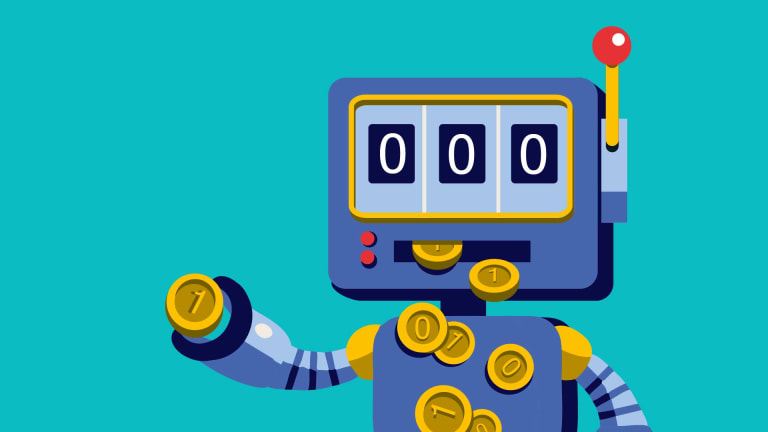
“The better you get at it, the more you want to use it,” he wrote in the post, titled The AI Vampire. “It’s simultaneously satisfying, frustrating, and exhilarating. It doles out dopamine and adrenaline shots like they’re on a fire sale. Many have likened it to a slot machine. You pull a lever with each prompt, and get random rewards and sometimes amazing ‘payouts.”
He’s far from alone. It seems that every day, developers are sharing similar sentiments online. There’s also a growing bank of research to support the feeling that while AI might lead to more productivity, it’s also intensifying work, leading to more hours, and increasing cognitive strain.
One study by engineering analytics firm Multitudes that tracked the workflows of over 500 developers found that engineers using AI tools for coding work experienced a 19.6% rise in “out-of-hour commits,” or submissions of coding work outside their typical schedules.
Multi-agent workflows
AI-assisted coding, vibe coding, agentic coding: the new approach to software engineering has accumulated various names as it’s evolved over a short time.
In the latest version, developers are using autonomous agents to plan, write, test, and debug code end-to-end. Developers tell LeadDev that the momentum of agent-powered coding – in particular, the way it always makes you feel like you’re on the cusp of something – often makes it difficult for them to step away from their keyboard.
Managing multiple agent-based workflows, rapidly context-switching, and trying to wrap their heads around the exorbitant amount of code being produced also adds complexity and can feel overwhelming, even causing developers to sometimes get lost in their own projects.
Importantly, these aren’t anti-AI views; developers who are especially excited about agentic coding describe these effects, seemingly with the most intensely. “I’m coding into later hours of the day not because I’m told to do so,” said Eren Celebi, principal engineer at advertising firm WPP. “But because I can’t get myself to get up from the computer.”
Your inbox, upgraded.
Receive weekly engineering insights to level up your leadership approach.
Losing sleep and weekends
After coding with AI for a year, Doug Sims, a senior software engineer at Paramount, said he finds it interesting, fun, and in some ways more enjoyable than coding by hand. He said he’s more productive than ever, but also far busier. The possibilities enabled by agentic coding also make him feel like he needs to move faster.
“I think part of the reason why a lot of software engineers, including me, are stressed is because we realize it’s such an opportunity. It’s kinda like you’re a kid in a candy shop. You just want to eat it all at once,” he said.
Sims attributes the intensified speed to the rapid feedback loop of agentic coding: you can test ideas much faster, more quickly discard those that don’t work, and run with a more promising idea significantly faster than before, making the investment in trying something new “much less than it used to be.”
Rajesh Padmakumaran, vice president and AI practice leader at Genpact, echoed that the way AI tools make it incredibly easy to generate scaffolding code, APIs, tests, and documentation in minutes “creates a powerful sense of momentum.”
“Developers quickly get into a flow state where they can move from idea to working software much faster than before,” he said, adding that he’s found AI-coding to feel “a bit addictive.”
For Sims, this amounts to not only doing more and doing it more rapidly, but spending more time coding, too.
“Until sometime last year, I had a normal social life. I work a day job, and I can keep that constrained to normal hours. But I feel compelled to be doing side projects and learning constantly. I start every weekend off with a plan – what I want to try, learn, and the topics I want to explore. And the weekends just disappear,” he said.
While not specific to engineering, a study by ActivTrak Productivity Lab analyzed workplace behavioral data of 163,638 employees between January 1, 2023 and December 31, 2025. It found that AI has driven a 46% and 58% increase in Saturday and Sunday productive hours, respectively.
Overall, the authors concluded that “AI is adding to workloads,” including a sharp increase in time spent for every activity category tracked including messaging (+145%), collaboration (+5%), and time spent in business management tools (+94%). In particular, they found that high-performing employees are “adopting it and doing more – not the same amount more efficiently.”
It’s not clear how much this is due to working with the technology itself versus how business and cultural dynamics are changing as a result, but developers at least feel the tools are having a direct impact. Sims said the positive reinforcement provided by agentic coding tools drive him to take on more and work through nights and weekends. When he’s trying to get something to work and then it does, he finds it difficult to step away.
“I would always stay up late at night if I felt like I was really onto something new,” he said. “But now it feels like I’m onto something new every day.”
More like this
Cognitive overload
UC-Berkeley researchers have been observing a U.S.-based technology company to learn how generative AI is changing work habits. They recently published preliminary findings in Harvard Business Review which found that the promised productivity gains of AI are leading enthusiastic AI adopters in particular to take on more work, work faster, and unsustainably multitask. All because AI makes “doing more” feel possible. And once the excitement wears off, it’s a recipe for cognitive overload and burnout.
For example, the researchers frequently witnessed workers prompt AI during lunch, in small in-between moments, and just before leaving their desk so their agents could work while they were away, adding up to a workday with fewer pauses and a more continuous involvement with work. Workers also began to try new things, “but these experiments accumulated into a meaningful widening of job scope,” the researchers wrote.
The researchers also observed agentic coding drive increased multi-tasking and cause engineers to carry a growing number of open tasks, including running multiple agents in parallel and tackling previously-deferred tasks because they could now be run in the background. With AI making coding accessible beyond the technical teams, engineers were also frequently pinged to coach and review code for colleagues who took up “vibe coding,” which further added to their workloads.
Padmakumaran has seen this first-hand across both small teams with a handful of engineers, to large enterprise engineering organizations with upwards of 80 developers.
“Many are juggling multiple AI tools embedded in IDEs, chat interfaces, or agent-based workflows, which adds another layer of mental context switching. So even as productivity increases, the cognitive overhead of managing AI-generated output can increase as well,” he said, adding that it’s those who enjoy AI coding the most who he sees feeling the most cognitive load.
That increased cognitive load – along with the fact that agents are now writing the code – is also wreaking havoc on engineers’ ability to fully understand what they’re working on.
Margaret-Anne Storey, a computer science professor at University of Victoria Canada who focuses on the social aspects of software engineering, noted how agentic AI and the associated rise in coordination overhead leads to a growing number of “invisible decisions,” shifting engineering concerns from technical debt to “cognitive debt.”
For example, she described one team she worked with hitting a wall when no one was able to explain how different parts of the system were supposed to work together or why certain design decisions had been made, according to a blog post she published on the topic.
“This is not just about code quality. It is about whether individual developers and product teams can maintain a coherent mental model of what the system is doing and why,” she wrote.
Celebi said that at its worst, AI coding makes it hard for him to understand his own work. For example, if Claude uses a library he’s not familiar with, he ends up losing his ability to debug his own code.
“I end-up chasing around the AI looking for answers, like a junior engineer would send Slack messages to the senior asking for advice,” he said.
Finding balance
Sims believes these ill-effects of agentic coding will likely improve as the excitement fades, but some developers are already making it work for their benefit.
Alon Sabi, a backend developer and founder of SREDify, admits he too has found himself going to sleep later out of excitement as he works on coding projects (like spontaneously making a game for his family to play together).
At the same time, he said agentic coding has freed him up to actually step away from his screen. Now that he’s primarily thinking through bigger questions – “What is the next phase I need to ask it to build? What will be the sequence of things?” – rather than typing out functions, he goes for walks outside while working in his head.
Sabi believes his previous experience as an engineering manager has served him well in this respect; he’s used to breaking processes into smaller chunks and getting others to do most of it, he said. For individual contributors, however, the idea of managing a bunch of agents is a significant shift.
The nature of how agentic coding tools work may feel addictive, but according to Sabi, developers need to set the pace. Prioritization, pace, and the sequencing is controlled by humans, after all.
“There are tons of benefits. But at the same time, we also need to understand there’s a limit to how much we can grasp as human beings and how much we can crank out without introducing too many bugs and too many issues with the code,” he said. “It’s a balance like anything else.”

Berlin • November 9 & 10, 2026
Close the gap between what leadership expects and what’s actually possible at LeadDev Berlin.